
Civilisational Roots of Chinese Strategy
Thought, Culture, and Power
China is not merely a civilisation counted in centuries or confined to timelines; it is a living river of thought, memory, and human imagination flowing unbroken through time. Long before the world learned to chronicle its past, Chinese civilisation was already asking profound questions about existence—shaping philosophies, rituals, and social orders that sought harmony between heaven, earth, and humankind. Life was not seen as a struggle to conquer nature, but as a quiet, enduring conversation with it, where balance, restraint, and rhythm mattered more than domination.
Cradled by fertile river valleys and blessed with vast landscapes, ancient China turned geography into destiny. The Yellow and Yangtze rivers did more than nourish crops; they sustained communities, ideas, and aspirations. From these waters emerged cities, trade routes, and traditions that blended material prosperity with cultural refinement. Yet China's greatness was never rooted merely in abundance. It was forged in the way knowledge, ethics, and craftsmanship became inseparable from daily life—whether in the patient art of silk weaving, the precision of bronze casting, or governance guided by moral responsibility rather than brute force.
What sets Chinese civilisation apart is its rare continuity of spirit. Values such as filial devotion, reverence for learning, inner discipline, and social harmony were not passing ideals but living principles, carried from one generation to the next. Dynasties collapsed, borders shifted, and history trembled, yet the civilisational soul endured—absorbing change without surrendering its essence. This quiet resilience transformed China into more than one of the world's oldest civilisations; it made it one of the most influential, shaping minds, cultures, and innovations far beyond its borders.
To encounter Chinese civilisation is to feel time breathe—to stand where ancient wisdom still speaks, where spirituality and statecraft intertwine, and where culture is not preserved in memory alone, but lived, felt, and carried forward with reverence.
Chinese Philosophy and Literary Influence
Chinese philosophy represents a deep and layered blend of moral thinking, natural harmony, and political discipline developed over thousands of years. At its heart lies Confucianism, which stresses ethics, social order, respect for elders, hierarchy, and responsibility. It holds that true order arises not merely from force, but from moral conduct and righteous leadership. This belief shaped Chinese governance, family life, and social structure for centuries.
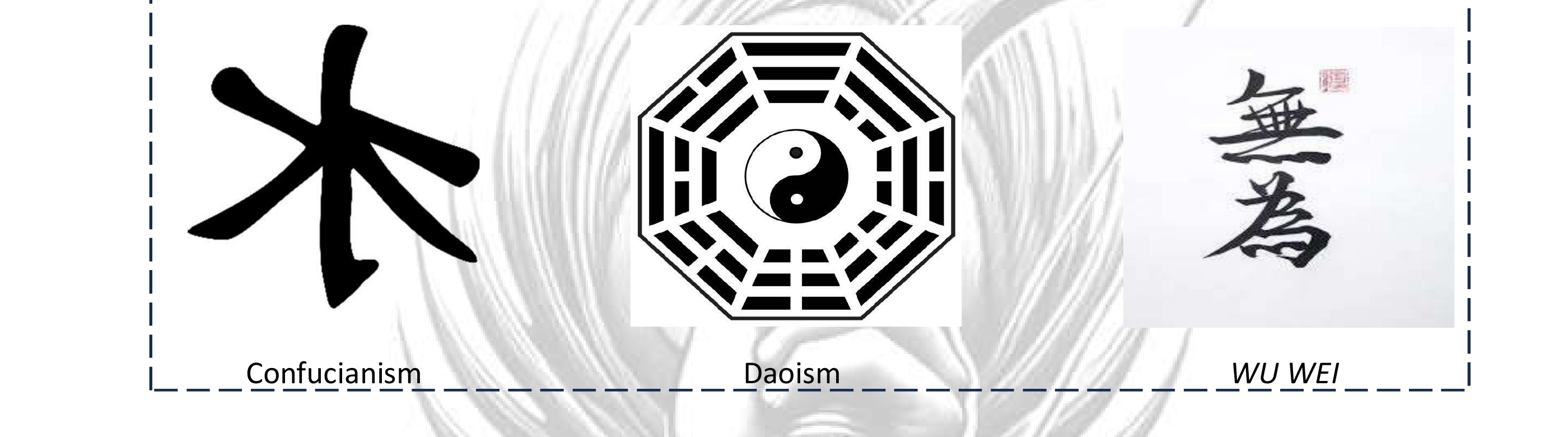
Alongside this moral framework stands Daoism (Taoism), offering a more inward-looking vision of life. Daoism teaches harmony with nature, balance, simplicity, and the principle of wu wei—effortless action. Rather than forcing outcomes, one learns to flow with reality. This philosophy closely mirrors Indian spiritual traditions that emphasize inner awareness, detachment, and self-realization.
The harder edge of Chinese thought appears in Legalism, which argues that strict laws and strong authority are necessary to maintain order. Legalism deeply influenced China's centralized and disciplined state system, particularly in governance and military organization. In contrast, Mohism promoted equality, universal care, merit-based rule, and opposition to unnecessary wars, adding a practical ethical dimension to Chinese philosophy.
Chinese cosmology is further shaped by the ideas of Yin and Yang, symbolizing balance through opposing yet complementary forces, and the Five Elements theory, which explains natural cycles and transformation. These ideas resonate strongly with Indian concepts of balance, duality, and cosmic order found in Hindu philosophy and the Puranic worldview.
A major bridge between Indian and Chinese civilizations is Buddhism, which travelled from India to China and enriched Chinese thought with compassion, meditation, and liberation from suffering. Over time, Indian Buddhism evolved into uniquely Chinese forms such as Chan (Zen), blending seamlessly with Daoist simplicity and Confucian discipline. Indian Buddhism emphasized inner awakening and detachment, while Chinese Buddhism added structure, harmony, and everyday practice—both traditions remain relevant even today.
The philosophical similarities between India and China run even deeper. Indian texts like the Ashtavakra Gita focus on intense self-reflection, inner awareness, and freedom from illusion—ideas closely resembling Zen Buddhist meditation and Daoist introspection. Likewise, the Bhagavad Gita teaches karma yoga—action without attachment to results—a principle echoed in Chinese thought, where duty, discipline, and righteous action matter more than personal reward.
Just as India draws inspiration from the Vedas, Upanishads, Puranas, and epics like the Ramayana and Mahabharata, China draws from Confucian texts, Daoist philosophy, Buddhist sutras, classical literature, and military works such as The Art of War. Both civilizations believe that true strength lies in consciousness, discipline, moral clarity, and civilizational continuity—not merely in material power.
There is also a striking parallel between Indian strategic realism and the Chinese model of governance. The ideas of Kautilya, articulated in the Arthashastra, emphasize realpolitik, efficient administration, intelligence, economic strength (artha), and pragmatic statecraft. These principles—balancing morality with realism—are clearly reflected in Chinese political and strategic thinking.
Over time, these philosophies did not compete but blended into a unified worldview, shaping Chinese culture, governance, family values, and social ethics. Much like India, China remains a deeply rooted civilisation—philosophical, disciplined, culturally confident, and guided by ancient wisdom that continues to influence modern life and strategic thinking.
Military Heritage and Strategic Thought
Ancient military texts like The Art of War and classical literature continue to minutely shape the identity and war thought of the Chinese. Most Chinese military thinkers and strategists strongly believe that ancient Chinese values and warfare principles remain relevant even today. Unlike many modern militaries that rely heavily on Western doctrines, China draws confidence from its own civilizational wisdom.
China's strategic culture is influenced by its geography, long historical memory, major events, and enduring figures such as Confucius. Studying past PLA military campaigns reveals not just how China fights wars, but how it thinks about power, restraint, leadership, and discipline.
Confucius (551–479 BC) was one of the most influential philosophers in Chinese history. His teachings, preserved in the Analerta, emphasize morality, education, rituals, and structured relationships. He described society as a network of hierarchical but mutually beneficial relationships—ruler and minister, father and son, elder and younger brother, husband and wife. In each, the superior must protect, while the subordinate must remain loyal and obedient.
The PLA also sees itself as the heir to an ancient literary and strategic tradition. Chinese military education frequently draws lessons from the Four Great Classical Novels—Romance of the Three Kingdoms, Water Margin, Journey to the West, and The Plum in the Golden Vase. These stories are deeply embedded in Chinese culture, much like the Ramayana and Mahabharata in India.
Among these, Romance of the Three Kingdoms and Water Margin hold special importance for the PLA. Their heroes combine Sun Tzu's strategic brilliance with Confucian moral values, fighting cleverly, courageously, and in the name of righteous governance. Mao Zedong frequently cited these novels, and modern PLA publications draw practical lessons in tactics and leadership from them.
China's military thinking is further grounded in the Seven Military Classics, canonised during the Song Dynasty. These include Six Secret Teachings, The Methods of the Sima, The Art of War, Wuzi, Wei Liaozi, Three Strategies of Huang Shigong, and Questions and Replies between Tang Taizong and Li Weigong. Written between 500 BC and 700 AD, these texts cover strategy, deception, intelligence, logistics, leadership, and military technology.
The Thirty-Six Stratagems is a classic Chinese work on strategy and deception. Its modern version is based on a handwritten manuscript discovered in Shaanxi province, China, with its author and exact date remaining unknown. First printed in 1941, it gained public attention after a 1961 review in Guangming Daily. The book consists of 36 stratagems arranged into six chapters, each containing six stratagems. The first three chapters focus on advantageous situations, while the latter three address difficult or disadvantageous circumstances.
Chinese military thinking is deeply influenced by The Art of War, which emphasizes strengthening national power and understanding the enemy rather than direct confrontation. According to this philosophy, observing an opponent's responses is as important as military force.
China and the World Currently
This Art of War realism also explains the India–China context. India under Nehru followed idealism, Panchsheel, and moral diplomacy. China, however, pursued ruthless pragmatism rooted in strategic realism. Nehru underestimated Chinese intentions, ignored military preparedness, and relied on goodwill. China exploited this weakness through deception, patience, and timing, resulting in India's territorial loss in 1962—a clear policy failure where idealism was overpowered by realism.
Chinese strategy relies heavily on psychological pressure, prolonged signaling, and sudden calibrated actions. Long periods of calm lower vigilance, followed by sharp moves that shock opponents and shift ground realities. This pattern—pressure, pause, surprise—is a core Art of War method.
The same mindset is visible in China's behaviour toward Japan, Australia, Taiwan, and the South China Sea. China probes reactions, builds presence incrementally, and avoids direct war while altering facts on the ground. In the South China Sea, domination was achieved through gradual militarization and legal ambiguity rather than open conflict. Around Taiwan, continuous pressure is applied through airspace incursions and naval drills.
The Quadrilateral Security Dialogue (QUAD) increasingly recognises this strategy. India, Japan, Australia, and the United States understand that China seeks dominance through encirclement, pressure, and exhaustion—winning without fighting.
China is also acutely aware of its vulnerabilities, particularly the Malacca Dilemma—its dependence on the Malacca Strait for energy and trade. This drives its push for maritime control and alternative routes, again reflecting Art of War logic.
What makes China unique is its unwavering faith in its intellectual heritage. Chinese scholars, soldiers, and policymakers rely on their own literature, philosophy, and strategic memory rather than Western validation. This continuity gives China a distinct identity, long-term outlook, and a military culture rooted in patience, discipline, moral authority, and civilizational confidence.
Key Lessons Drawn by the People's Liberation Army from Ancient Chinese Military Classics
- Avoid or Minimise Direct Confrontation Whenever Possible: Ancient Chinese strategy prioritises winning without fighting. This includes using diplomacy, weakening enemy morale, and drawing enemy forces away from the battlefield. Even when war becomes unavoidable, the classics discourage total destruction of the enemy, preferring to intimidate and control rather than annihilate.
- Victory Depends on Careful Planning: Chinese martial tradition stresses that wars are won before they are fought. Commanders must carefully study terrain, assess the enemy's strengths and weaknesses, and realistically evaluate their own capabilities. This approach values pragmatism over idealism and flexibility over rigid doctrines.
- Stratagems and Deception as Core Military Tools: Military success is believed to depend largely on misleading the enemy. Surprise, deception, propaganda and disinformation are seen as force multipliers. The use of stratagems—clever tricks and schemes to outthink the opponent—remains central to the PLA's approach to warfare.
- Strong Fighting Spirit (Qi) is Essential: Chinese military texts emphasise the mental and spiritual strength (qi) of soldiers, comparable to morale. Even when material resources are limited, strong qi can sustain combat effectiveness.
- Synergy Between Diplomacy and the Military: A close coordination between diplomatic and military instruments has historically been a hallmark of Chinese strategy. From the Qin Dynasty's shifting alliances to modern China's changing partnerships—from the Soviet Union to the United States and later back toward Russia—foreign policy has been used as a strategic tool to shape favourable conditions for security and survival.
- Emphasis on Comprehensive National Power: Chinese strategic thought links military strength to overall national power. Thinkers such as Sun Tzu highlight the need to balance military expenditure with economic sustainability, ensuring that power can be maintained over the long term rather than exhausted in short conflicts.
- Preference for Regime and Force Survival over Territory: Chinese history shows that survival often takes precedence over territorial control. Land was sometimes ceded temporarily to avoid unfavourable wars, with the expectation of reclaiming it later under better conditions. Short-term territorial loss was not viewed as dishonourable if it ensured long-term survival.
Towards an Indian Strategic Philosophy: Reclaiming Power, Pride, and Pragmatism
- From Idealism to Moral Realism: India must move beyond moral idealism that failed to protect national interests in the past, most notably before the 1962 debacle. While figures like Mahatma Gandhi shaped India's ethical identity, geopolitics demands realism. India's strategic thought must draw from Kautilya, the statecraft of Krishna, and the diplomatic intelligence of Hanuman. Morality must guide intent, but pragmatism must guide action.
- Reclaiming the Memory of Past Glory: A civilisation that forgets its greatness loses the will to rise again. India must consciously remember the scale of the Chola Empire and its status as a global economic and cultural hub. This is not nostalgia, but strategic memory. Nations that remember past greatness strive to reclaim relevance.
- Shatru-Bodh and Civilisational Consciousness: India must retain awareness of historical injustices, colonisation, and lost territories—not to remain bitter, but to remain alert. The Mahabharata reminds us: "As one acts, so shall one be treated." Strategic innocence invites exploitation.
- Rewriting History, Rebuilding Strategic Culture: India must shed colonial historiography that portrayed it as passive and weak. Strategic education should instil pride, clarity, and confidence among citizens. The idea is not to reject modernity, but to combine Vedic wisdom with contemporary excellence.
- Bharat as a Moral Civilisation-State: India should be seen not merely as a nation-state, but as Bharat Mata—a civilisational entity deserving respect. High moral ground must be India's strength, not its weakness. Ethical leadership, restraint with resolve, and principled conduct elevate India's stature.
- Military Superiority and Credible Deterrence: Peace is preserved through strength. India must pursue military superiority, especially maritime power, to secure its interests. Incidents like the Galwan Valley demonstrated India's resolve and changed the deterrence equation.
- Cooperation Where Possible, Confrontation Where Necessary: Strategic flexibility is central to Indian thought. As Lord Krishna demonstrated, peace is preferable—but war is acceptable when dharma is threatened. India must engage adversaries economically and diplomatically where beneficial, and confront them firmly where required.
- Strategic Defence and Alliance Formation: India must revive Kautilya's Mandala Siddhanta, where alliances are fluid and interest-based. Permanent friends or enemies do not exist—only permanent interests. Strategic defence involves shaping the environment through partnerships, not isolation.
- Economic Liberty as the Foundation of Power: The Arthashastra makes it clear: economic strength underpins military and political power. India must promote economic freedom, innovation, and productivity. Prosperity is not a luxury—it is a strategic necessity.
- Civilisational Confidence — Knowledge and Moral Leadership: India's strength lies not in racial superiority, but in knowledge depth, intellectual heritage, and ethical traditions. From mathematics to philosophy, India historically led global thought. Reclaiming leadership in education, research, and values-based governance builds soft power and respect.
- Strategic Defence and Atmanirbhar Bharat: Self-reliance in defence production is crucial for sovereignty. Dependence limits strategic choice. Atmanirbhar Bharat is not isolationism—it is resilience.
- Civilisational Connectors — Silk Route, IVC, Buddhism: India must strategically manage its civilisational linkages—Indus Valley heritage, Buddhist networks, Silk Route memory, and Tibet's cultural significance. These are not just historical artefacts but tools of influence.
- Development Without Loss of Autonomy: India must modernise without surrendering strategic independence. Growth should not come at the cost of policy capture or external pressure. Autonomy enables ethical leadership and flexible diplomacy.
- Leadership of the Global South on Ethical Lines: India is uniquely placed to lead the Global South—not through domination, but through ideas, reform advocacy, and inclusive growth models. Historically, India led through knowledge and example.
- Ecology and Development Not Being Antagonists: China's story has shown that, through civilisational memory and drawing from it, developmental goals can be achieved without entirely compromising the ecological health of geography.